
.png?width=1920&height=1080&name=WiER%20content%202026%201%20(2).png)
The energy transition in Australia presents an opportunity for renewal, reinvention and reshaping in the sector; not only to build a new energy system, but to build better workplaces to support it.
With inspired innovations, technological advancements, and exciting new ideas and approaches to renewable generation and energy storage taking centre stage, the need for more inclusive, supportive and equitable working environments is growing.
Empowering women in the sector means ensuring they can speak with confidence, know their expertise is valued, see clear opportunities to progress, and feel genuinely part of the team. This is fundamental to building and retaining the strong, diverse and capable workforce of the future.
Representation alone is not enough
Beyond diversity metrics, women in the energy and renewables sector need to feel a genuine sense of belonging to their organisation, knowing their expertise is recognised and valued, their voices are heard, and they can envision a long-term future for themselves.
Designing an inclusive workplace is not just a numbers game, it is about reforming organisational culture and creating a safe, respectful work environment where everyone is accountable.
The Clean Energy Council’s chief operating officer Fiona Schutt affirmed that “creating truly inclusive workplaces for women in energy and renewables is about much more than increasing representation.”
“Whether in the field, on a project site or in a corporate office,” Schutt said “flexible and practical workplace policies, clear pathways for career growth, equitable opportunities and leaders who actively champion diverse talent,” are all foundational to improving conditions across the sector.
TasNetworks’ interim chief executive officer Renee Anderson also said that while representation matters, inclusion goes beyond someone walking through the door.
She described a “genuinely inclusive workplace” as one “where women can be themselves, speak up, have their expertise valued, and see a future for themselves in the industry, whether they’re working on a project site, out in the field, in a control room, or sitting around a boardroom table.”
ENGIE’s chief executive officer Laura Caspari, and managing director of retail Andrea Bernard emphasised that “persistent gender gaps show that technology alone will not deliver the transition.”
Empowering and equitable workplaces are essential to developing a future-ready workforce.
As Schutt puts it, “inclusion [is] part of everyday culture, not just a box to tick.”
Designing an organisation that is flexible
Creating a sector that is equitable, safe and supportive benefits every employee, and improving working environments for all is essential to the energy transition. The workplaces of the future should offer fluid working arrangements, meaningful parental leave and career-break provisions, alongside policies that enable both men and women to share caring responsibilities without compromising their career progression.
Anderson emphasised these are the ‘little things’ that create the biggest differences.
Building better workplaces means: “Leaders who listen. Managers who actively create opportunities rather than waiting for people to put their hands up. Flexible working arrangements that recognise people have lives outside work. Clear and equitable pathways for progression. And workplaces where caring responsibilities, career breaks or different ways of working aren’t quietly treated as a lack of ambition.”
Caspari and Bernard also said that “the sector needs broader pathways into meaningful work, stronger leadership pipelines and workplaces designed for different life stages and ways of working.”
This includes managing life as a parent or carer.
Amplitude Energy chief advisor and general manager of strategy Ying Luo said, “in my personal experience, the most important change to support inclusivity for women, especially in a male dominated workforce such as the energy sector, is genuinely gender-neutral flexibility and family support policies.”
Luo shared that she “was able to return to work full time after each of my children, because my partner’s work enabled him to take leave as the primary carer.”
“Too often, flexible work arrangements are seen as something primarily for women"
Empowering men and women alike to take parental leave, and normalising flexible working and the sharing of caring responsibilities is a systemic change we need to overcome unconscious bias against women and mothers in the workplace.”
Luo and Anderson both affirmed that the goal of strengthening conditions across the sector should not be exclusive to women. Facilitating an accessible, fluid and supportive work environment means prioritising the needs and wellbeing of all employees, regardless of gender, role, or career stage.
Clearer pathways for women to enter, progress and lead
From attracting women into trades and field-based roles, through to sponsorship, mentorship, visibility, and creating clearer, more accessible career pathways and leadership pipelines; organisations need to actively open their doors, instead of expecting women to knock them down.
Caspari and Bernard told Energy Insights, that the responsibility primarily falls with the leaders, “to challenge bias, build psychological safety, and open doors for talented women through visibility, sponsorship and stretch opportunities.”
Jemena executive general manager of people, safety, and governance Craig Ypinazar described a two-pronged approach to building more equitable organisations: listening and taking action.
Ypinazar described the two employee networks established in October 2025 at Jemena and Zinafra to help drive this work; She Builds and She Elevates support both women in field and women in office-based roles through listening sessions, networking, mentoring and career development opportunities.
According to Ypinazar, opening spaces where women can “share lived experiences, build connections and influence meaningful change,” is essential to “creating more inclusive, supportive environments where women can thrive at every stage of their careers.”
Anderson also spoke on TasNetworks’ Career Revive program that provides a supported pathway for employees, but especially women, who are returning to work after a career break. The program helps rebuild skills, confidence and professional networks, she described.
Anderson affirmed the importance of mentorship and sponsorship relationships.
“Sometimes the biggest difference to someone’s career is simply having a person in a position of influence say, I think she’d be great for this.”
“These things can sound small individually, but collectively they send a powerful message about who a workplace was designed for.”
Make inclusion practical
In a male-dominated field, inclusion needs to be visible in the everyday experience.
Ypinazar explained that through the She Builds and She Elevates programs, Jemena and Zinafra “have seen our female apprentice intake increase from 10% in 2023 to 25% in 2026.”
“We are now supporting the experience of our female apprentices by improving facilities, PPE, safety and career pathways for women in field-based roles,” he said.
Ypinazar reiterated that combining employee insights with practical improvements is key to strengthening workplace conditions.
Anderson also emphasised the importance of visible and practical efforts towards respectful, accessible and psychologically safe organisations.
“For women working in the field [inclusion] means thinking seriously about site facilities, PPE and equipment designed for different body types, accommodation, safety, roster structures and what it actually feels like to be the only woman on a crew.”
Anderson also acknowledged there needs to be an meaningful cultural shift.
“We need to move beyond the idea that resilience means putting up with poor behaviour, long hours or outdated attitudes.”
“A strong workplace isn’t one where people must develop a thick skin; it’s one where they don’t need one in the first place,” she said.
Workplaces of the future
The energy transition is a chance to build more than a cleaner energy system. It is a chance to build a better industry. By listening to women, removing structural barriers and making inclusion practical, the energy and renewables sector can create workplaces where more people can enter, progress and lead and build the workforce needed to deliver Australia’s energy future.
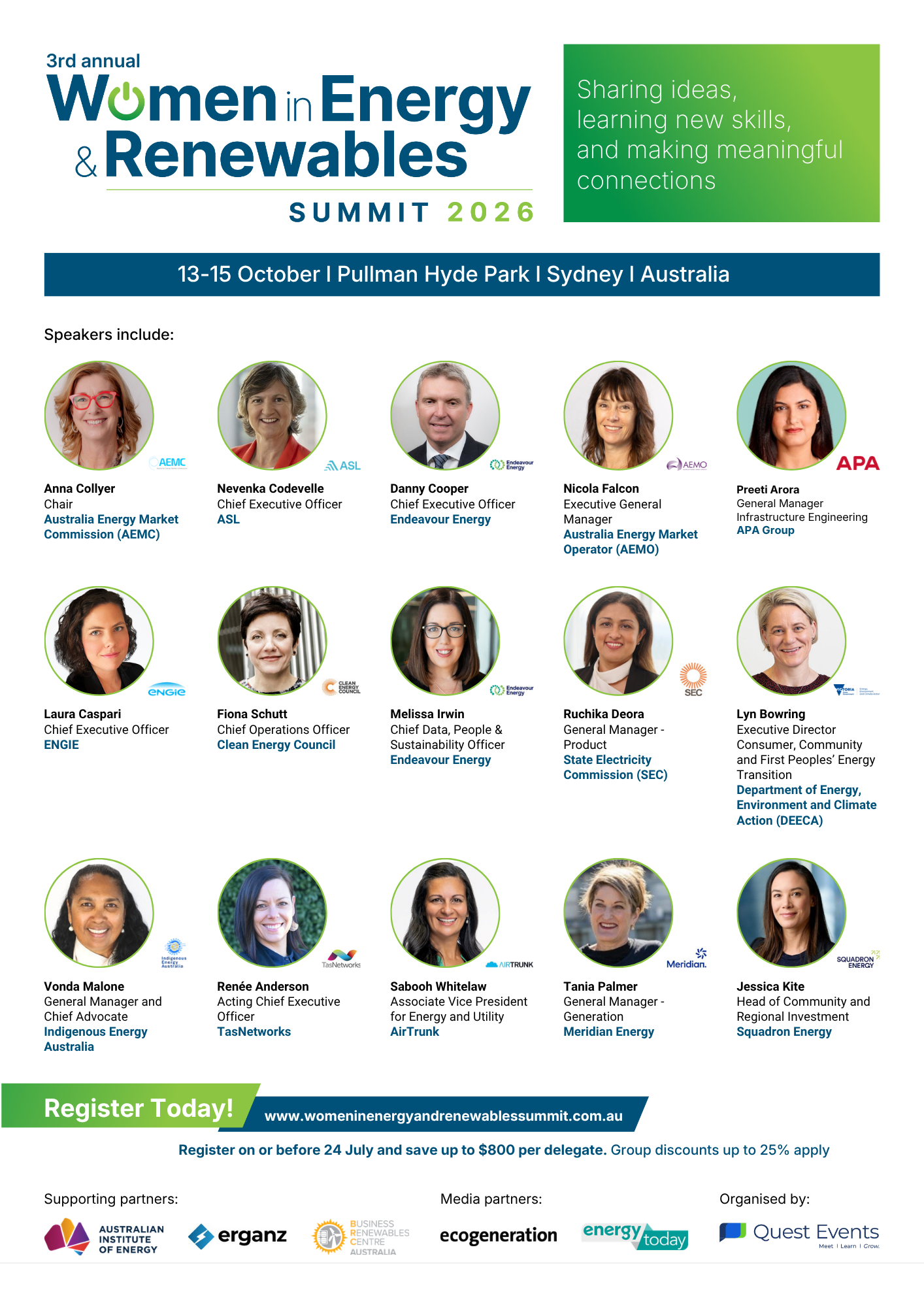
Download the Brochure
Gain insight into what to expect at the 3rd annual Women in Energy & Renewables Summit 2026.